Process performance
Review of cycles, temperatures, treatment times, flows, actual capacity, stability and quality of the process result.
CFI Systems modernises existing furnaces, incinerators, cremation equipment, thermal cleaning ovens, pyrolysis furnaces, precious-metal recovery furnaces and other industrial thermal processes.
The objective is to improve safety, availability, compliance, energy consumption, process quality and emission control while retaining equipment that remains technically relevant.
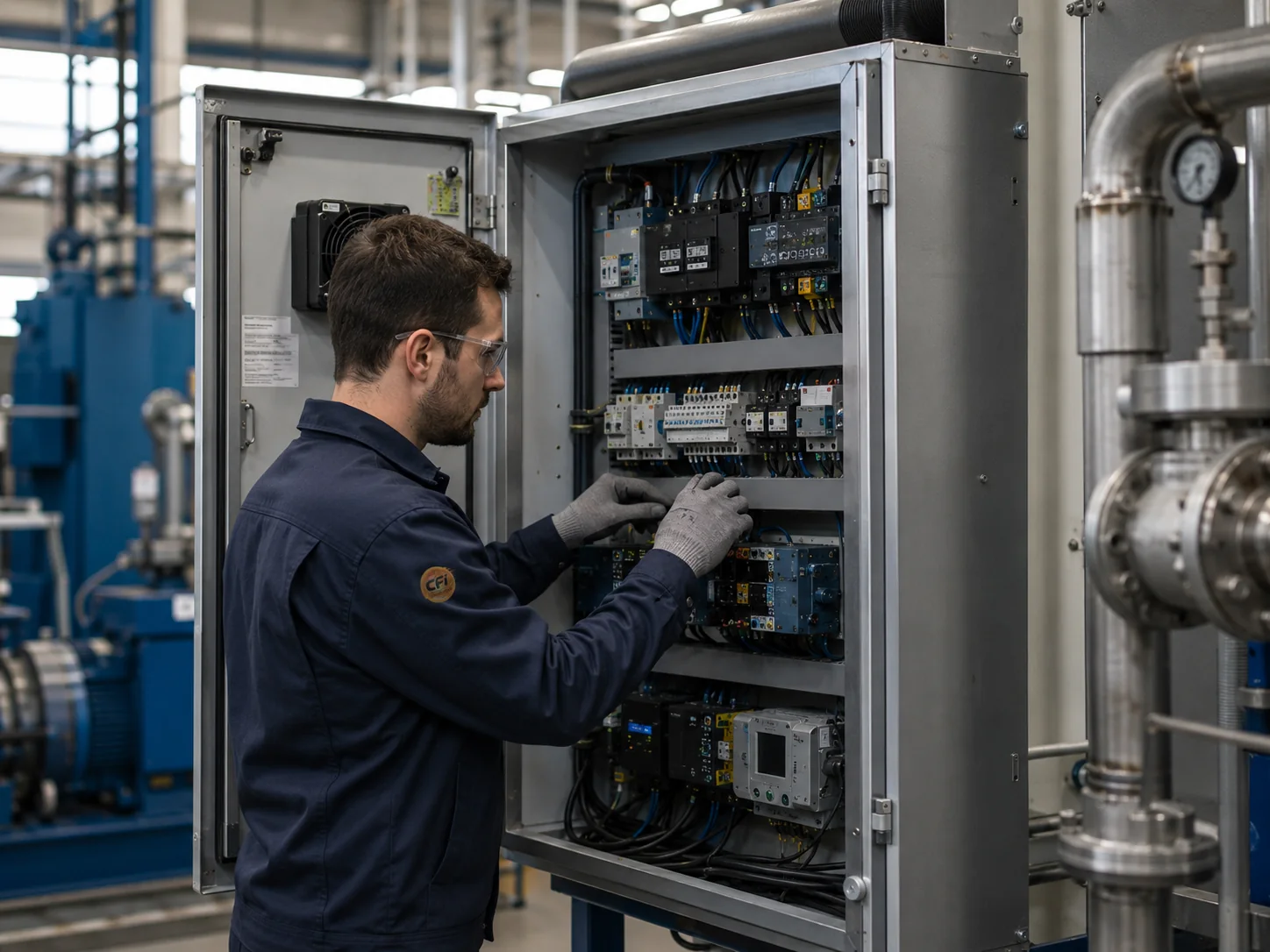
A relevant retrofit starts with a technical review of the existing equipment: furnace structure, refractory lining, combustion, ductwork, filtration, automation, instrumentation, safety systems, handling, energy consumption and actual operating conditions.
CFI Systems identifies the limiting points, the equipment that can remain in service and the modifications that provide a genuine improvement without unnecessarily rebuilding the complete installation.
Review of cycles, temperatures, treatment times, flows, actual capacity, stability and quality of the process result.
Burners, fuel trains, combustion air, O₂, negative pressure, modulation, flame safety and consistency between installed power and actual thermal duty.
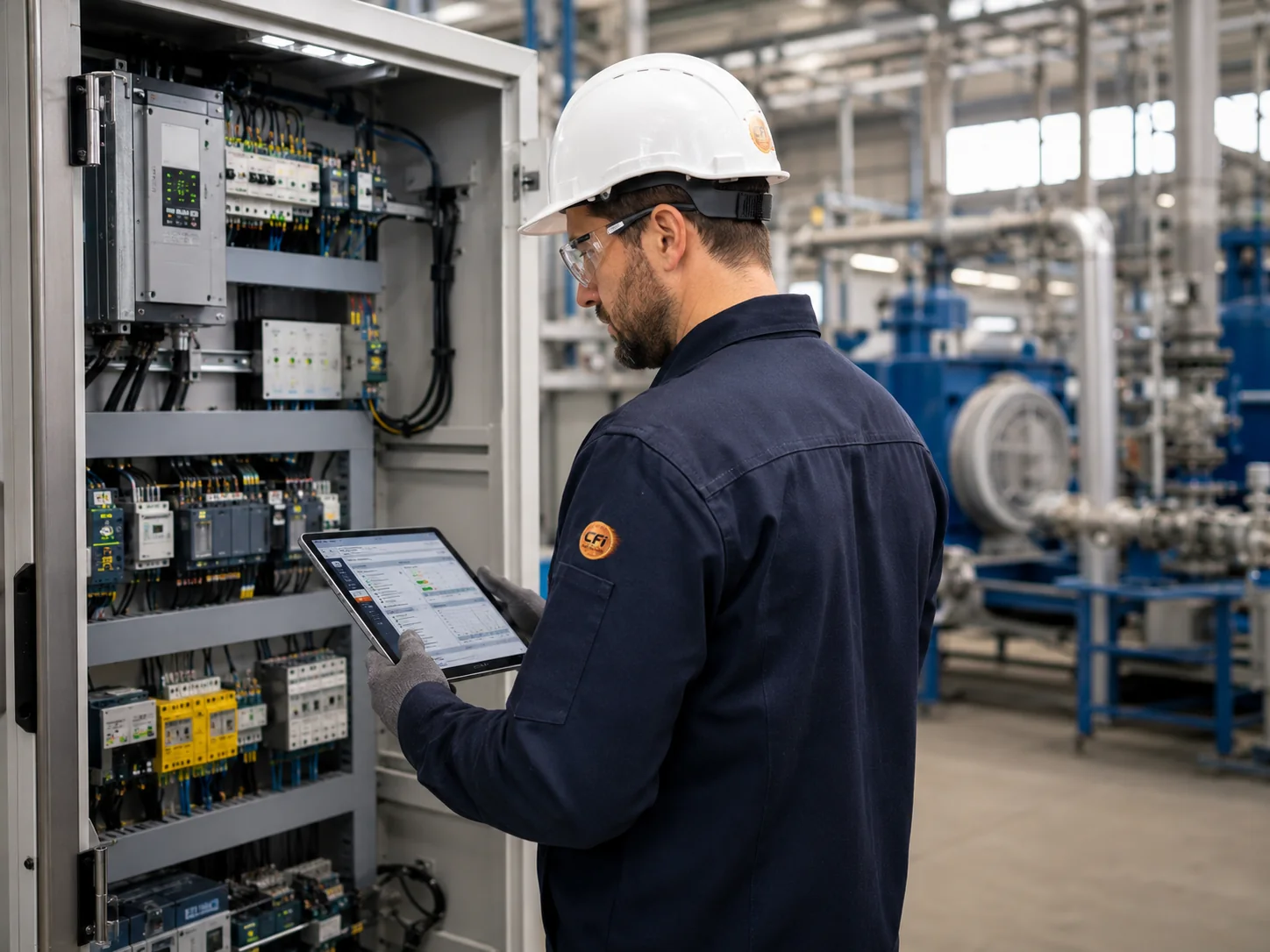
Condition of PLCs, HMIs, drives, networks, alarms, data logging, remote access and spare-parts availability.
Temperatures, pressure drop, reagent dosing, filtration, extraction, emissions monitoring and suitability for future operating conditions. Explore flue-gas treatment & filtration →
Doors, carts, tables, conveyors, structures, sealing, insulation, refractory systems, anchors and maintenance access, with identification of repair or relining requirements.
Condition, fouling, pressure drop and performance of water-tube or smoke-tube heat exchangers, including replacement, resizing and heat-recovery options. Explore waste-heat recovery →
Automation, mechanical equipment, instrumentation and piping are considered as one integrated system.
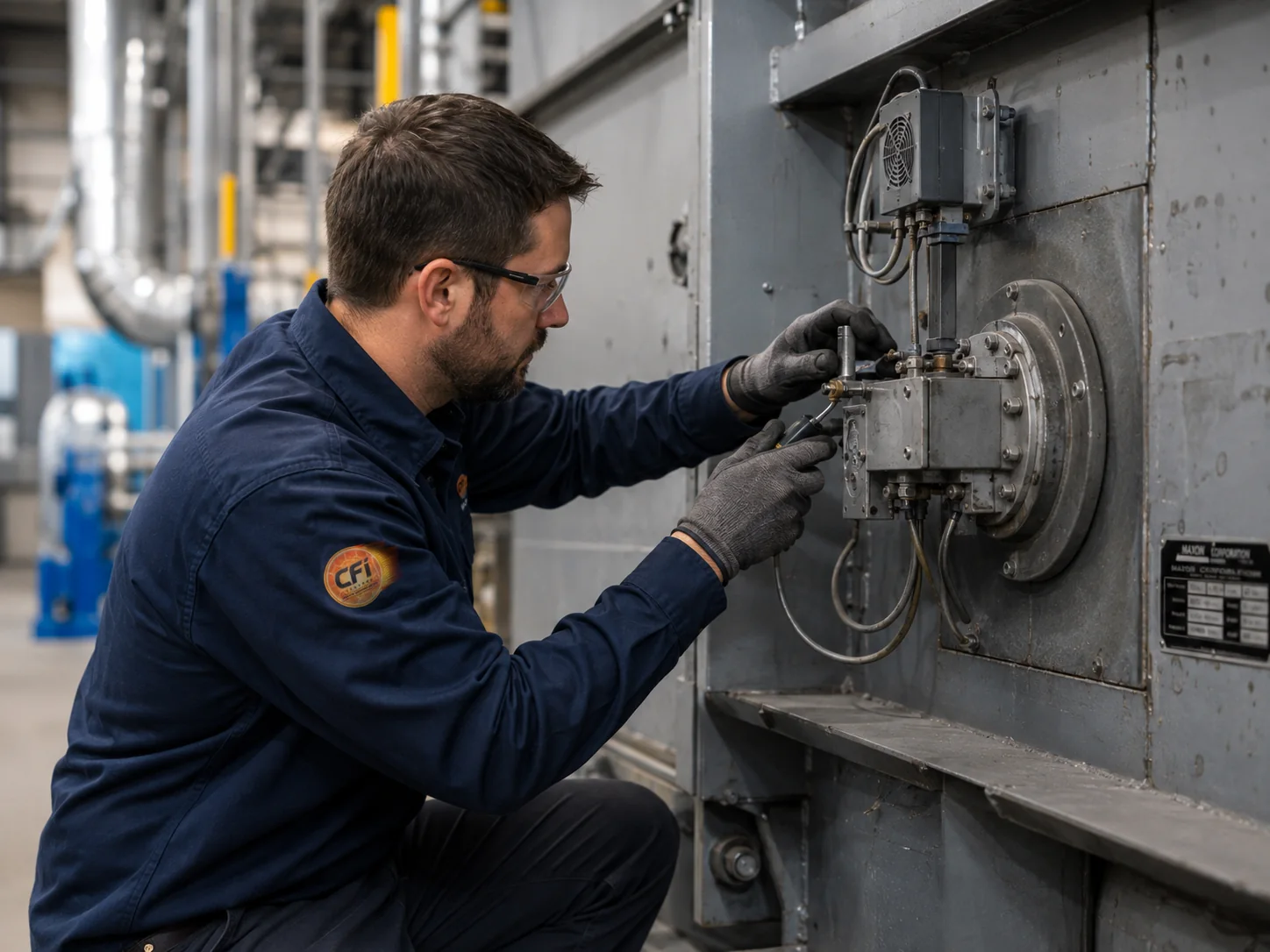

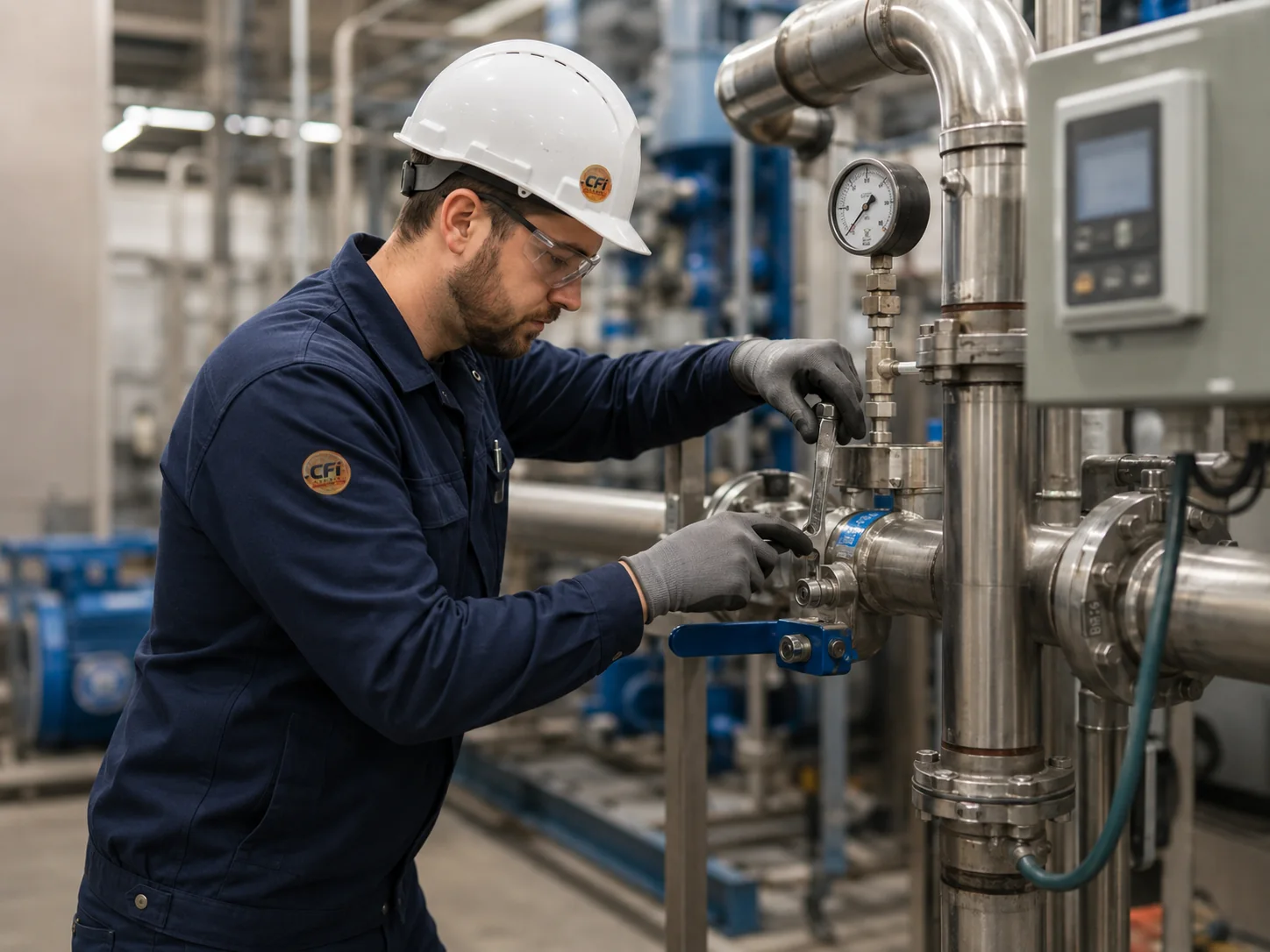
The best solution is not always complete replacement. A mechanical structure, furnace chamber or part of the ductwork may remain suitable while the control system, burners or filtration require major modernisation.
CFI Systems develops several technical scenarios to compare investment, shutdown duration, expected gains, risks and future scalability.
CFI Systems works across the interfaces between mechanical, thermal, flue-gas, electrical and automation systems so that a local improvement does not simply create a new bottleneck elsewhere.
Replacement or resizing of burners, fuel trains, fans, valves and air/fuel control strategy.
Migration of obsolete PLCs, new HMIs, data logging, alarms, remote access and new operating modes.
Interlocks, emergency stops, flame control, doors, overheating protection, negative pressure and safe-state sequences.
Cooling, reagent injection, filters, extraction, analysers, stacks and adaptation to new emissions requirements.
Heat exchangers, hot water, steam, thermal networks or electricity generation from waste heat where appropriate.
Doors, carts, tables, conveyors, cooling, insulation, refractory systems, anchors and improvements to operator ergonomics.
PLC migration should not mean blindly copying the old program. Retrofit is an opportunity to document sequences, remove accumulated workarounds, improve diagnostics and secure critical functions.
CFI Systems can revise functional analyses, integrate new instrumentation, modernise the operator interface and simplify future maintenance.
An older installation may have been built to standards different from those currently applicable, or may have evolved over time without a complete review of safety functions.
CFI Systems can perform a technical diagnosis, identify gaps within its scope and integrate the required changes to combustion, instrumentation, automation, flue-gas systems and safety functions. Final regulatory acceptance remains dependent on the framework applicable to the site and the competent authorities or notified bodies where required.
Changing the material treated, increasing throughput or modifying furnace temperatures can shift the operating point of the complete gas-treatment line. A coherent retrofit therefore checks cooling, reagent dosing, filtration, extraction and instrumentation together.
Flows, temperatures, pressure drops, concentrations and actual equipment behaviour.
Adapt heat exchangers or cooling equipment to new temperatures and downstream treatment requirements.
Review storage, dosing, mixing and control according to pollutants and performance targets.
Assess filter media, filtration area, cleaning system, sealing and operating margin.
Recalculate pressure losses and fan duty to maintain the required furnace negative pressure.
Integrate or modernise emissions analysers and data logging for relevant process parameters.
On an existing thermal installation, the heat exchanger is often a critical item: corrosion, fouling, leakage, reduced efficiency, difficult cleaning or insufficient capacity after a process upgrade. CFI Systems can study its replacement and integration into the existing flue-gas line.
Water-tube architecture suited to higher thermal duties or installations requiring strong heat-transfer dynamics and integration into a hot-water or energy-recovery loop.
Smoke-tube or fire-tube architecture selected according to thermal duty, available footprint, maintenance access and the required level of heat recovery.
Adaptation of flue-gas and water interfaces, supports, thermal expansion, pumps, valves, instrumentation and control, with the option to resize capacity for a new operating regime.
Design takes account of deposits, dust and cleaning requirements: access doors, inspection hatches, mechanical cleaning or online cleaning devices where appropriate.
Review of flows, temperatures, pumps, expansion vessel, safety valves, pressures, bypasses and protections required for integration of the replacement exchanger.
The replacement is sized to deliver a flue-gas temperature compatible with neutralisation, filtration and extraction without creating excessive pressure drop.
The water-tube or smoke-tube choice is project-specific: recoverable duty, temperature, flue-gas quality, fouling risk, available space, hydraulic requirements, maintenance and downstream equipment all influence the decision.
Older installations may operate with high excess air, infiltration, very hot flue gases, inefficient motors or heat exchangers that are undersized, fouled or obsolete. The audit ranks improvement actions according to technical and economic impact.
Waste heat can be recovered by replacing or adding a water-tube or smoke-tube heat exchanger, then used as hot water or steam and, on suitable duty and operating-hour profiles, converted into electricity.
In a retrofit, refractory condition directly affects safety, energy efficiency and process stability. CFI Systems can integrate refractory repairs, partial replacement or full rebricking / relining according to the actual condition of the furnace.
Inspection of bricks, castables, fibre linings, joints, roofs, hearths and hot spots, including analysis of cracking, distortion, wear and infiltration.
Targeted interventions on damaged areas where complete relining is not yet required: joints, wear parts, local corrective works and reinforcement of identified weak points.
Removal of the existing lining, review of supports and anchors, definition of the new refractory concept and complete reconstruction of the chamber or critical zones.
The new lining concept is selected according to temperatures, thermal gradients, chemical attack, cycling, thermal shock and mechanical constraints of the installation.
The dry-out, heat-up and return-to-service programme is prepared to protect the new refractory and secure the restart of the furnace.
The lining concept influences heat losses, furnace thermal stability, availability and the future frequency of maintenance interventions.
Equipment can still operate correctly while becoming fragile because its PLCs, drives, sensors, burners or interfaces are no longer supported. Retrofit allows these risks to be addressed before a failure leaves the site without a practical solution.
CFI Systems favours documented architectures, maintainable industrial components and maintenance access designed into the modernisation.
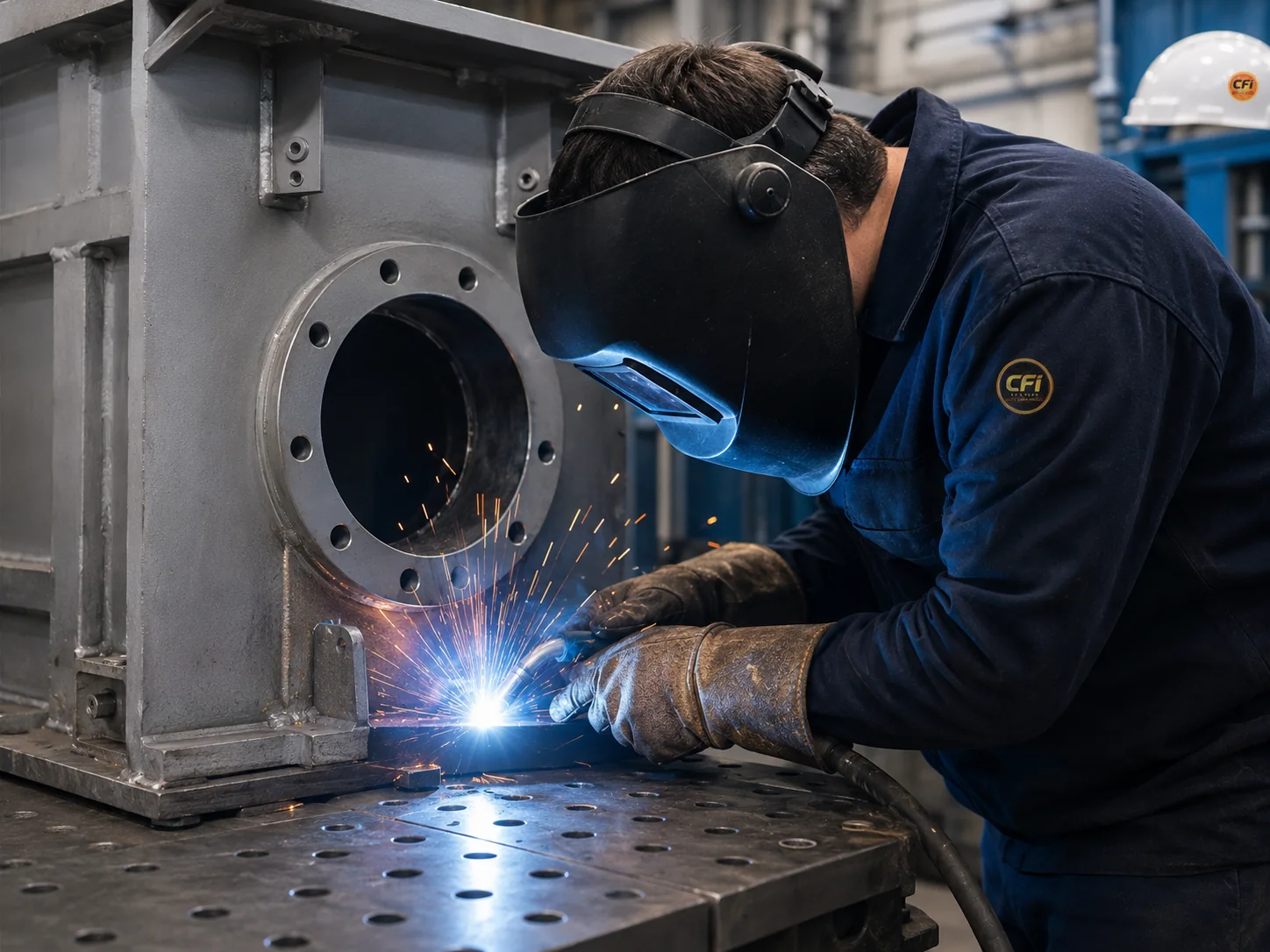
On an existing installation, downtime is often one of the main constraints. A large part of the work should therefore be completed in advance: surveys, engineering, prefabrication, programming, workshop testing and site preparation.
Site dimensions, interface review, drawings and validation of the final arrangement.
Fabrication, wiring, programming and testing of subassemblies before the planned shutdown.
Detailed sequencing of removal, modification and installation activities.
Verification of safety functions, actuators, sensors, automation and interlocks.
Combustion, negative pressure, temperatures, filtration, energy consumption and recipes.
Documentation, operator/maintenance training and support during restart.
Objectives are defined before the work: temperature stability, lower energy consumption, fewer shutdowns, improved availability, easier maintenance, lower emissions or increased capacity.
Where sufficient data exists, CFI Systems establishes before/after indicators to verify the actual effect of the modifications.
Retrofit requires more knowledge of the existing installation than a new-build project. Undocumented interfaces, historical modifications and building constraints are therefore addressed from the beginning of the study.
Technical condition, measurements, available documentation, site constraints and client objectives.
Identify root causes, risks and the actual limits of the installation.
Compare different levels of modernisation: combustion, heat exchangers, filtration, automation, energy recovery, cost, expected gains, required shutdown and scalability.
Drawings, automation, fabrication and testing prepared before intervention on site.
Removal, installation, testing, tuning and validation of the upgraded system.
Review operating data after restart and apply further optimisation where required.
A new burner on a poor-draft system, a new PLC with unreliable instrumentation or a new filter without reviewing gas cooling will not solve root causes. CFI Systems focuses on the interfaces between the different disciplines of the installation.
Safety, performance, energy, availability, emissions and maintainability define the priorities of the retrofit.
Measure actual operation and distinguish root causes from symptoms.
Control investment by retaining technically sound equipment.
Combustion, controls, safety, flue gas, energy or mechanical systems according to the diagnosis.
Compare before/after data to confirm the result of the retrofit work.
The right level of modernisation depends on the actual condition of the equipment, its future duty and the cost of full replacement.
It means modernising all or part of an existing installation to improve safety, performance, availability, compliance, energy consumption or capacity without necessarily replacing the complete furnace.
Burners, fuel trains, fans, PLCs, supervision, instrumentation, doors, carts, conveyors, refractory systems, heat exchangers, filters, extraction fans, analysers and many other subsystems can be reviewed.
Yes. A retrofit can include local refractory repairs, partial replacement or full rebricking / relining. The study covers furnace condition, operating temperatures, thermal cycling, mechanical constraints, dry-out requirements for the new refractory and the effect on the shutdown schedule.
Yes. Migration can include a new PLC, new HMI, revised functional analysis, new sensors, data logging and improved diagnostics.
CFI Systems can diagnose gaps within its technical scope and integrate required changes to combustion, automation, safety, instrumentation and flue-gas treatment. Final regulatory acceptance depends on the applicable framework and competent authorities or notified bodies where required.
Often yes. Improvement opportunities may include excess air, burner modulation, insulation, infiltration, fan speeds, heat exchangers and standby strategy. Expected gains are assessed from actual operating data.
Yes, but interactions with the furnace, afterburning stage, flue-gas temperature, reagent dosing and extraction fan must be checked so that the problem is not simply moved elsewhere.
Yes. CFI Systems can study replacement of a water-tube or smoke-tube / fire-tube heat exchanger, either like-for-like or resized. The study covers flue-gas flow and temperature, recoverable duty, pressure drop, hydraulic loop, safety devices, cleaning access and compatibility with downstream filtration.
Yes where the thermal resource and operating profile justify it. Heat can be recovered as hot water or steam and, in suitable cases, converted into electricity.
By completing as much surveying, engineering, prefabrication, programming and testing as possible before shutdown. Site work is then organised around a detailed removal, installation, testing and restart sequence.
No. If the structure, refractory systems and several major functions are all at end of life, replacement may be more rational. The audit is used to compare scenarios before deciding.
Thermal equipment within CFI Systems' areas of expertise: cremation, incineration, thermal cleaning, pyrolysis, precious-metal recovery and associated industrial thermal systems.
Retrofit strategy depends on the process, the existing equipment and the objective. CFI Systems applies the same audit-led method across cremation, incineration and industrial thermal systems.
Combustion, automation, filtration, mercury abatement, heat recovery and replacement strategy for existing cremation installations.
Charging, combustion, afterburning, refractory, flue-gas treatment, automation and energy recovery for existing incineration lines.
Thermal cleaning, pyrolysis, precious-metal recovery and other furnace systems where reliability, safety, emissions or energy performance need to evolve.
CFI Systems works on cremation systems, incineration systems, thermal cleaning & paint stripping ovens, pyrolysis furnaces and precious metal recovery furnaces, together with their combustion, flue-gas treatment, automation and heat-recovery equipment.
Explore all our solutionsObsolescence, energy use, safety, emissions, capacity, automation, combustion, filtration, heat-exchanger replacement, refractory relining or energy recovery: CFI Systems can start with a targeted audit before defining the retrofit scenario.
For UK crematoria, PG5/2(25) can make retrofit, abatement and replacement decisions part of the same engineering strategy. Read our dedicated technical guide to the 4 December 2029 transition.