Jewellery & precious-metal workshop residues
Wipes, PPE, papers, packaging, floor sweepings and workshop consumables that may contain particles of gold, silver or platinum-group metals.
CFI Systems designs and integrates thermal systems for production residues containing precious metals. The furnace removes organic fractions in a controlled manner so that mineral and metallic constituents remain concentrated in a solid residue suitable for downstream recovery and refining.
The design covers not only the thermal chamber, but also batch segregation, handling, cooling, control of fine-particle carry-over, afterburning, flue-gas treatment and cycle traceability.
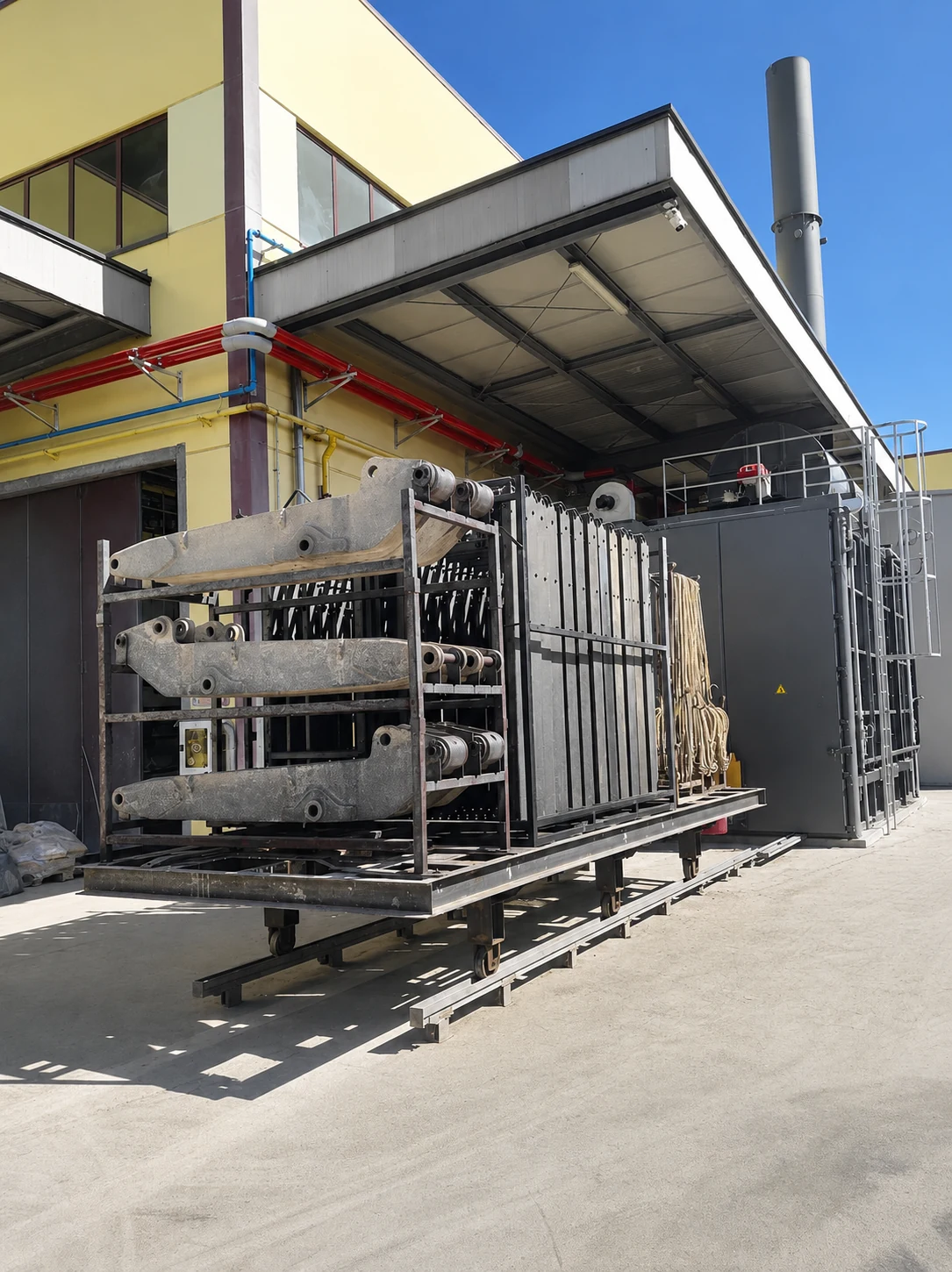
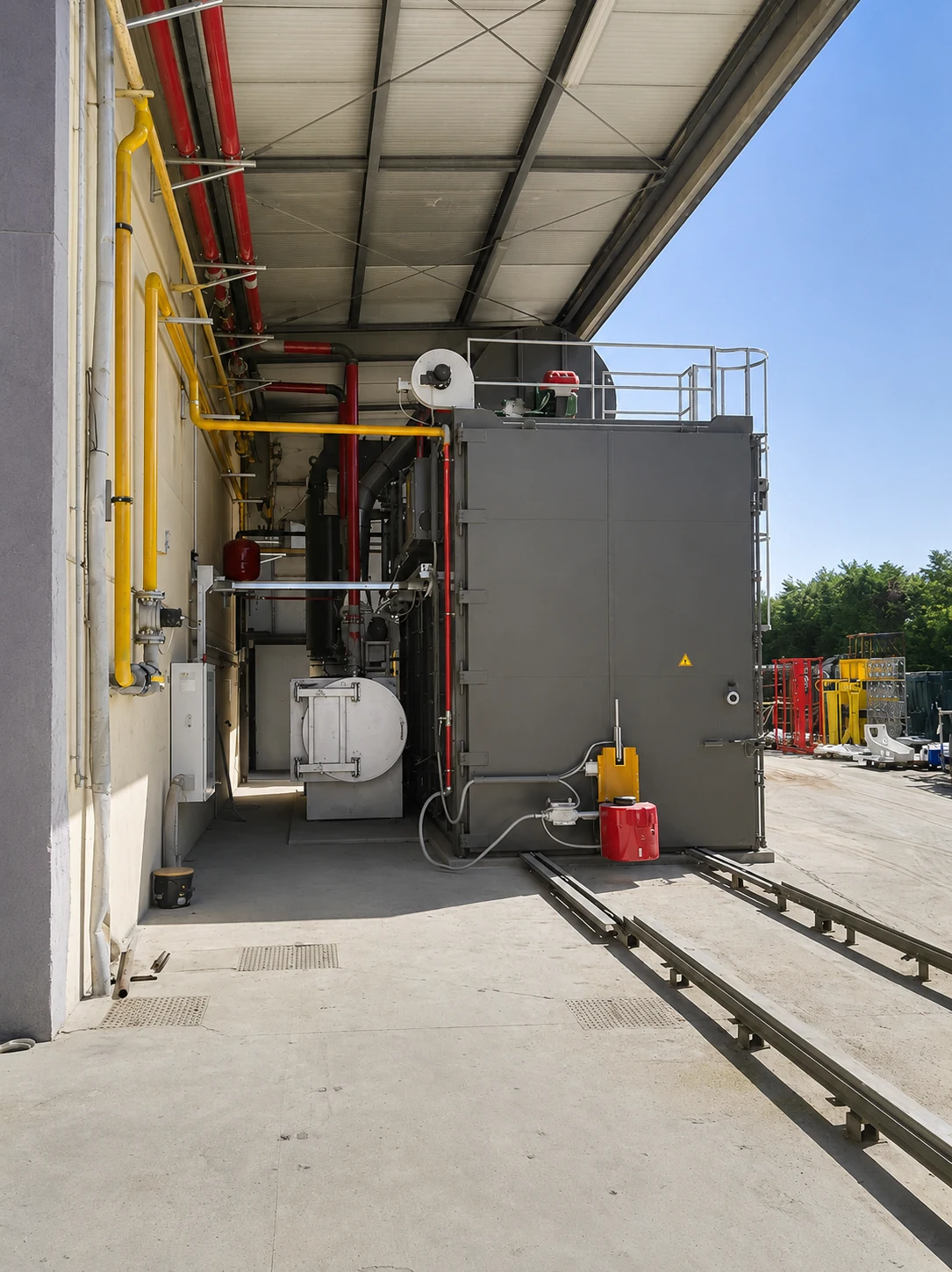
Loading, physical batch segregation and furnace accessibility directly support material control and downstream recovery.
Precious metals can be present as very fine particles, deposits, powders, salts or traces dispersed in organic supports. Thermal treatment removes the combustible matrix while retaining as much of the metallic fraction as possible in the solid residue and in the capture system.
Each waste family requires a suitable recipe and handling concept: composition, moisture, calorific value, particle size, metal content, potential volatility, dust behaviour and the downstream recovery process all matter.
Wipes, PPE, papers, packaging, floor sweepings and workshop consumables that may contain particles of gold, silver or platinum-group metals.
Dust, compounds, filters, media and residues from polishing, grinding or finishing operations where control of particle carry-over is critical.
Powders, solids, sludges or catalyst supports containing platinum, palladium, rhodium or other recoverable metals, with the thermal recipe defined around the material chemistry.
Filter elements, ion-exchange resins, consumables and supports loaded with recoverable material from chemical, plating or surface-treatment operations.
Selected component, powder or electronic-residue streams where thermal treatment is a relevant preparation step before metallurgical or chemical separation.
Dry or wet waste, salts, insolubles, resins, inks or production residues containing a valuable metallic fraction and requiring a dedicated study of the thermal cycle and emissions.
The furnace is not the final refining stage: it prepares and concentrates recoverable material. Ash, solids and captured dust can then be routed to suitable grinding, homogenisation, sampling, melting, leaching or refining operations.
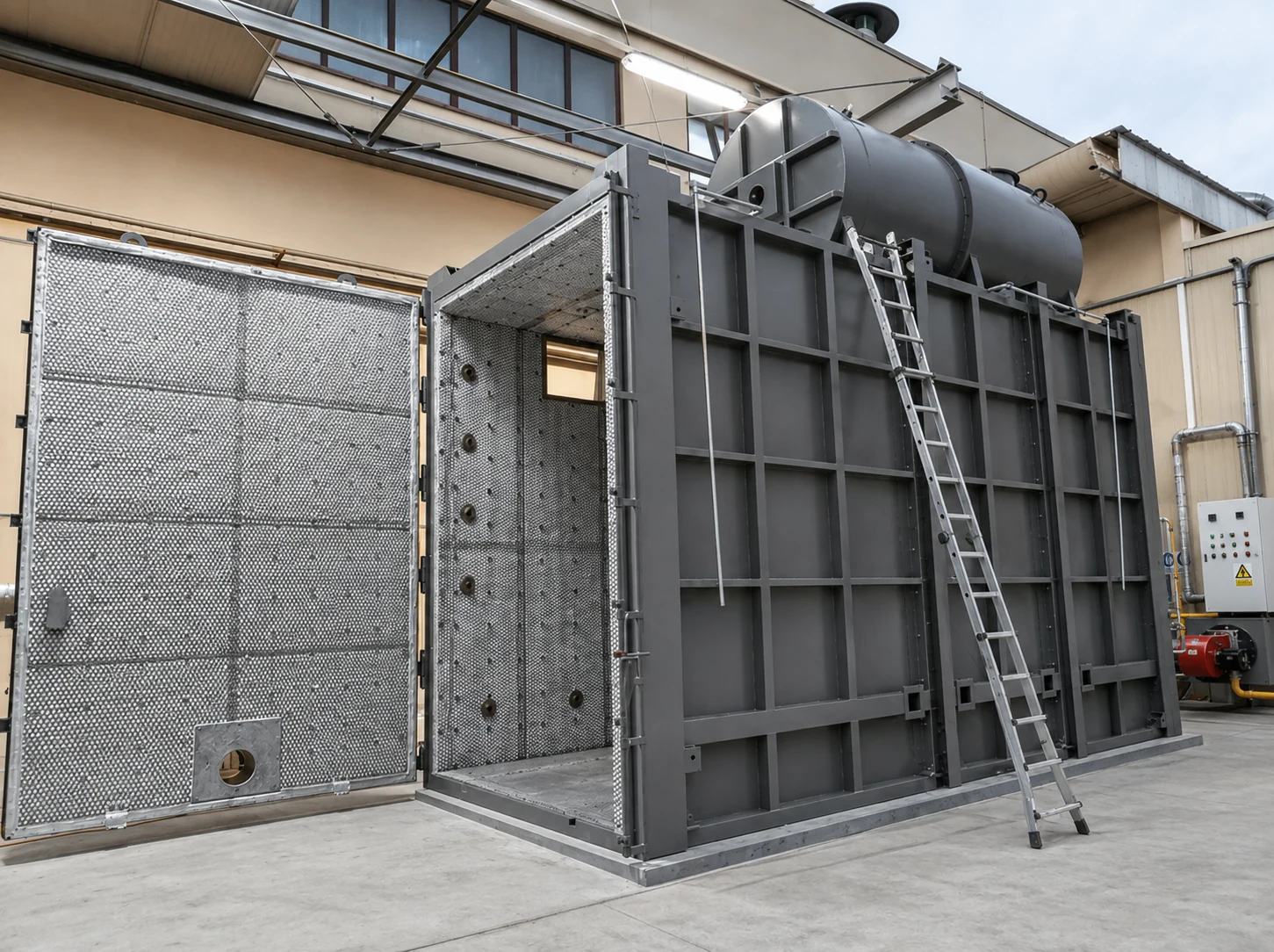
Process value depends on achieving the right balance: oxidise organic material sufficiently to produce a stable, usable residue while avoiding conditions that unnecessarily entrain fine particles or complicate downstream refining.
Depending on the product, CFI Systems studies static calcination, controlled thermal treatment or a dedicated firing cycle with management of air, temperature, negative pressure and residence time.
In precious-metal recovery, mixing two batches can have as much economic impact as a poor thermal cycle. The installation is therefore designed around traceability, physical segregation and handling that reduces operator exposure.
Containment is selected according to particle size, dust risk, batch mass and ash-recovery method.
Manual-assisted, mechanised or automatic loading depending on throughput and safety requirements.
A pass-through arrangement can be studied to create forward flow and separate loading and hot-unloading areas.
Ventilated cooling zone or enclosure to reduce support temperature before handling and improve operator safety.
Recipes, timestamps and batch parameters can be linked in the supervision system where internal traceability requires it.
The design minimises retention zones and facilitates recovery of the solid residue without cross-contamination between batches.
Heating can be gas-fired or electric depending on chamber size, throughput, control accuracy and the load itself. For very fine residues, a design avoiding direct flame contact may be advantageous in order to reduce unnecessary material movement and loss of valuable particles.
The chamber and combustion-air distribution are engineered to remove organic matter without generating excessive gas velocities across the material bed.
The flue-gas line must both meet environmental requirements and limit loss of recoverable material. Particle carry-over is therefore a design parameter from the furnace chamber through to the final filtration stage.
Depending on the waste, the system can include afterburning, gas cooling, acid-gas neutralisation, high-efficiency filtration, additional treatment of volatile metals and emissions monitoring.
After calcination or controlled thermal treatment, the mineral and metallic residue must be prepared for the next stage. The downstream route depends on the metal, the matrix, the concentration achieved and the site's recovery strategy.
Stabilise the batch and reduce temperature before opening, handling or transfer.
Recover ash, fines and captured dust into containers identified by batch.
Grinding or particle-size preparation where required to obtain a representative sample.
Determine metal content before selecting the appropriate recovery route.
Melting, separation or metallurgical treatment according to the nature of the recovered fraction.
Chemical, electrolytic or other specialist downstream processes used to reach the required purity.
On installations with sufficient thermal duty, heat leaving the afterburning stage can be recovered. The decision depends on operating hours, flue-gas temperature, cooling requirements before filtration and genuine site energy demand.
Heat recovery is designed without compromising flue-gas treatment stability or capture of precious-metal-bearing particles.
Residues to be recovered can combine solvents, resins, fine dusts, sludges, salts or high-calorific-value materials. The risk assessment defines the required safeguards for heating, extraction, oxygen, pressure, temperature, doors and cooling.
The chamber operates under controlled negative pressure to route emissions toward the flue-gas treatment system, while loading and cooling areas can be enclosed and ventilated.
The supervision system allows operators to select recipes, follow thermal and aerodynamic parameters, record alarms and retain cycle history. This is especially important when multiple waste families and high-value batches are processed on the same installation.
Temperatures, dwell times, air settings and sequences defined for each product family.
Batch identification can be associated with cycle parameters where internal traceability requires it.
Temperatures, pressure, oxygen, flows, consumption and peripheral-equipment status.
Trends, events, alarms and exports used for operation, maintenance and recipe improvement.
CFI Systems can audit an existing firing, calcination or thermal-treatment installation dedicated to precious-metal recovery and propose targeted improvements to safety, recipes, loading, cooling, filtration or automation.
The retrofit scope is built around actual operating constraints and compatibility with the equipment retained.
CFI Systems does not freeze a product range before the requirement has been characterised. Chamber size, load support, heating method, recipes and filtration are defined from the materials actually processed.
Composition, moisture, calorific value, particle size, metal content, dust and contaminants.
Target metals, required calcination level and downstream analysis / melting / refining route.
Containment, segregation, frequency, mass, throughput and traceability rules.
Chamber, heating, air, afterburning, cooling, filtration and extraction.
Loading, transfer, hot zone, cooling and ash recovery.
Testing, recipes, supervision, training and performance optimisation in operation.
In a precious-metal recovery installation, dust lost into a duct can have a value completely disproportionate to its mass. CFI Systems therefore integrates material-transfer control, fine-particle collection and batch traceability into the design from the outset.
Air velocity, heating method, tray geometry, cooling and filtration are coordinated to preserve the recoverable fraction throughout the process.
Limit carry-over and collect dust that may still contain recoverable metal.
Physical segregation, dedicated supports and cycle history according to site procedures.
Temperature, air and duration adjusted to the organic matrix and target metals.
Afterburning and filtration designed for both environmental performance and recovery of fines.
A thermal recovery installation must be designed around the waste, the metal to be recovered and the refining process that follows.
It thermally removes organic material from production waste or residues so that mineral and metallic constituents become concentrated in ash or solids that can then be analysed, melted or refined.
Depending on the stream, this can include gold, silver, platinum, palladium, rhodium and other valuable metals. Process suitability always depends on the real composition of the waste.
Polishing residues, floor sweepings, wipes, PPE, filters, resins, sludges, salts, catalysts, workshop consumables and selected electronic or industrial residues can be studied. The exact list depends on the site permit and waste characterisation.
Segregation preserves material traceability and avoids mixing streams with different grades or compositions. It also makes sampling, analysis and financial settlement of the batch easier downstream.
Through suitable chamber design, controlled air velocities, appropriate heating and load supports, followed by high-performance filtration capable of capturing any fine particles that are entrained.
No. The furnace is a thermal pretreatment step. The resulting residue is then routed to grinding, sampling, melting, chemical treatment or refining operations suited to the material.
Yes. Depending on throughput, trays or carts can be transferred by conveyor or another mechanised system, with a protected cooling zone before operator handling.
It depends on the waste and regulatory requirements. The line can combine afterburning, cooling, acid-gas neutralisation, particle filtration, adsorption of specific pollutants and emissions monitoring.
Yes, where thermal duty, operating hours and site demand justify it. Heat recovery must remain compatible with the temperatures required for effective flue-gas treatment.
Yes. An audit can cover recipes, automation, loading, safety, cooling, afterburning, filtration, extraction and energy recovery.
CFI Systems also develops cremation systems, incineration systems, thermal cleaning & paint stripping ovens, pyrolysis furnaces, as well as combustion, flue-gas treatment and energy-recovery solutions.
Explore all our solutionsJewellery residues, polishing waste, catalysts, filters, sludges, resins, salts, components or other industrial residues containing precious metals: CFI Systems studies the furnace, handling, cooling, flue-gas treatment and automation as one integrated system.